National university championships
Bologna University:
CUS Bologna is an amateur sports association that has been operating in the sports sector since 1946. It is a member of the Italian University Sports Center (C.U.S.I.); the latter, in turn, is associated with F.I.S.U. (Federation Internationale du Sport Universitaire), of which it is a founding member, and to the E.U.S.A. (European University Sport Association).
The main mission of the CUSB is to spread and enhance motor activity through the promotion of grassroots and competitive sports within all the university schools of Bologna and the local area, addressing in a transversal way the most diverse targets: from children to elderly, from amateurs to agonists, for all the CUS Bologna can be a point of reference and a valid support.
Objectives of the CUSB are:
the diffusion of sports culture and the ethical principles that animate it
the enhancement of sport as a tool for sharing and dialogue within society
the promotion of the universal values that sport conveys linked to socialization, respect between companions and opponents, to the mental and physical well-being of people
«Sport as body education, sport as training exercise, sport as team spirit and collaboration, sport as an activity that makes you aware of your physical potential: these are the first considerations that come to mind when I think sports activities that begin to be practiced by young people and that often (indeed, today more than ever) continue even in adulthood.
If it is true that the idea of university is the idea of a manifold set of knowledge, and of the transmission of this knowledge, we cannot ignore the fact that there is knowledge of the body understood as practice, as exercise, as an attitude. Each student of the Alma mater feels part of a community, and in this community sports facilities have a role similar to that of the classrooms, laboratories, libraries. In each of these spaces the part of a formation takes place. And we know that this training has no end, it must not end, because it continues in the world of work and in the world of passions, interests, free time. And sport can become a serious commitment, but basically it is also passion and fun.
There is a cliché that has to do with competitive activity, and it is a cliché that needs to be reviewed or at least corrected: the most competitive sports, if you want to get there first, you train to win. But sport is not this: anyone who practices a sport, and does it with a measured passion, knows that it is often played for the pleasure of playing, to get to practice. And you can also not finish first, not live with the anxiety of the agone. Exercising means measuring yourself with your own potential, finding the right place to place yourself in life. And this is what the true sportsman knows, or learns: what is the right place to place one’s well-being. Mental and physical, or – if you want – physical and mental. «
Francesco Ubertini – Rector of the University of Bologna
«Dear students and dear students, this year too we set ourselves the task of organizing your future sports activities within the University of Bologna. We rest our feet on a solid foundation, constituted an experience gained in seventy years of activity , but every season we start again with enthusiasm, ready to grasp your desires and offer you the emerging disciplines and the most requested activities of the moment. In wishing you a fruitful year of study and, why not, fun, I invite you to visit our office , where you can see the possibilities we offer you to practice your favorite sport and where we will be happy to listen to your requests and suggestions. And if you are already competitive athletes, do not overlook the opportunity to defend the colors of Alma Mater at the National University Championships, where every season students from all over Italy challenge each other to bring prestige to their University and where the Univers Bologna, since the first editions of the Championships, is at the top in results. However, every year it is increasingly difficult to confirm ourselves: we need you too! «
Piero Pagni – President of CUS Bologna
«Sports activities have assumed increasing importance in Alma Mater’s strategies. The drafting of the university sports development plan since 2015, as well as the importance that sport takes on the United Nations’ sustainable development goals, attest the basis of the strategic planning of the University: sport is in fact a fundamental lever to achieve the promotion of the health and well-being of students and human resources. Alma Mater also recognizes the role that sport plays in training specific skills, life skills Training and competition are in fact experiential pathways through which self-awareness is promoted and the ability to cope with stress, manage emotions, develop positive relationships within an organized context is developed, alongside these fundamental benefits. , there is also the belief that sport favors integration processes all Within the student community and strengthening the sense of identity with a large sports and university family. Finally, in a university that makes internationalization one of the pillars of its identity, it is natural that sport receives increasing attention, as occurs in the best universities in the world, thus strengthening the recognition of Alma Mater as an excellent and attractive place. These awarenesss are the foundations on which actions and projects are built: in this rectoral mandate the dual career regulation was introduced, for the reconciliation between high-performance sports experience and university studies; since 2019, the regulation has also undergone a significant innovation of the admission criteria, with a significant increase in the number of participants. The awards for sporting and study merits that the University assigns to students who distinguish themselves on both fronts are placed in the same line. Today a phase opens in which to proceed in the promotion of new formulas that can ensure the widespread promotion of sport and strengthen the sense of identification with the university community, balancing the opportunities for students of the different Alma Mater campuses. However, the strong motivation of the reference figures and structures involved in the planning and management of university sport must accompany the statement of objectives and the definition of projects; the University of Bologna knows that it has an already strong partner at its side, but still eager to grow, like the CUSB, with which to aim for increasingly ambitious goals. «
Maurizio Marano – Delegate for sports activities
The National University Championships (CNU) are held annually in two different sessions, the winter one for winter sports and the spring one for the other disciplines. They are promoted by the Italian University Sports Center (CUSI) and organized by the various University Sports Centers (CUS).
The CNUs represent the most important national sporting event aimed at the university world with the involvement of all 51 Italian CUSs.
Each year they are hosted in a different city.
If you play competitive sports and want to be part of the Alma Mater delegation at the CNU 2020, send your sports curriculum to: cusb.cnu@unibo.it
Celebrating Women’s Athletics at Yale
In 2019-20, Yale will celebrate the 50th anniversary of coeducation in Yale College and the 150th anniversary of women students at the university. As part of the larger 50 Women at Yale 150 events that are happening during 2019 and 2020, a group of athletic alumnae have been planning events and activities to acknowledge the 50 years since Yale’s women athletes were awarded their first Varsity Y’s. We hope that you will join us in some or all of the events being planned, and if you have ideas or want to volunteer to help we welcome you!
Yale Athletics Lux Et Femina Events:

Student-Athlete Events
January 27, 2020: Bravery Training with Crista Samaras, Founder & CEO of Get More Brave – Crista is a former Princeton Lacrosse player and former Yale Women’s Lacrosse Coach, who brings immense amounts of energy, inspiration and charisma to her sessions. This session focuses on practicing assertive behavior both internally and externally with an intent on helping Yale female student-athletes develop a fear management system to empower them to confront fear. You can read more about her and the Brave movement here.
February 15, 2020: National Girls and Women in Sports Day (NGWSD) – This annual celebration inspires girls and women to play and be active, to realize their full power. Yale Athletics is hosting a Community Clinic for ages 12 and under after the home WBB game, where kids from the New Haven community will be able to interact and participate in athletic activities with our various female sports. Learn more about NGWSD here.
Alumni Events
February 22, 2020: Lux Et Femina Spring Luncheon and Panel Discussion at the Yale Club of NYC – this luncheon will feature a panel discussion on women working in the business of sports.
12:00pm: Lunch
1:30pm: Panel Discussion: «Women in the Business of Sports: Tales from Yale Varsity Athletes»
Moderated by: Lawrie Mifflin ’73 (Field Hockey) – Managing Editor, The Hechinger Report
Panelists: Alexandra Lundy Dell ’94 (Women’s Tennis) – Vice President of Media, Lagardère Sports and Entertainment
Heather Daly-Donofrio ’91 (Women’s Golf) – Chief Tour Operations Office, LPGA
Zenab Keita ’14 (Women’s Basketball) – Manager of Partnership Development, Golden State Warriors
3:00pm: Cocktail Hour
Fall 2020 Symposium at Yale November 2020– we will have one or more panel discussions and other activities planned as part of the larger celebration of women that will be taking place on the Yale Campus in November 2020.
Celebrating Women’s Athletics at Yale Committee
We want to hear from you! Please use this link to update your contact information, indicate tentative interest in one or all of these events, volunteer to help and/or provide ideas for us to consider. This is our time to celebrate and remember all that’s been accomplished, and to set the stage for a strong future for today’s and tomorrow’s Yale female student/athlete
| Anne Boucher ’80; Crew (Captain)Nancy Cahill ’81; Softball (Captain), SwimmingBarbara Chesler Alison Cole ’99; Lacrosse (Captain)Ilona Emmerth ’98; GolfShoshanna Engel ’03; Gymnastics (Captain)Kim Fulton ’91; Track & Field and Cross Country Katrina Garry, ’18; Track & Field and Cross CountryKristen Gengaro ’00; Softball (Captain)Melanie Ginter ’78; SwimmingZerline Goodman ’84; SquashMaura Grogan ’78; Ice Hockey Beth Hadley ’77; Field Hockey, Lacrosse (Captain)Anne Keating ’77; Field Hockey, Lacrosse (Captain)Bray Ketchum ’11; Ice Hockey | Susanna Krentz ’80; Basketball, Volleyball (Captain)Karen Krieger ’79; Ice Hockey, SoccerClaire Leatherwood Slebonick ’09; Track & Field and Cross CountryPatricia Melton ’83; Track & Field and Cross Country (Captain)Christina Minnis ’87; SquashMary O’Connor ’79; CrewLaura Pappano ’84; Field HockeyMargot Putukian ’84; Lacrosse, Soccer Carol Roberts ’81; Field Hockey, SoftballSharon Robinson ’96; Lacrosse (Captain)Wendy Thum ’75; Swimming Kristin Udvari, ’96; Track & Field, (Captain)Barbara Wagner ’73; Gymnastics (Captain)Karen Yarasavage ’87; Basketball (Captain), Softball |
Links
The Tokyo University Research Center for Advanced Sports Science (QOM Gym)
QOM is a term proposed by Hiromichi Kobayashi and professor emeritus at the University of Tokyo. An abbreviation for «Quality of Movement», which stands for the quality of physical activity and movement in sport and daily life.
For training aimed at promoting health, «aerobic exercise» and «strength training» are generally recommended. These exercises show exercise intensity, amount of exercise, duration, and frequency as a guide, but the quality of movement is not much mentioned.
In sports and movements that use the body, art and entertainment, elements such as rationality of movement, flexibility, balance, aesthetic beauty and natural movements that do not cause injury, fatigue or effort. Such factors are also important. These factors are related to «quality of operation».
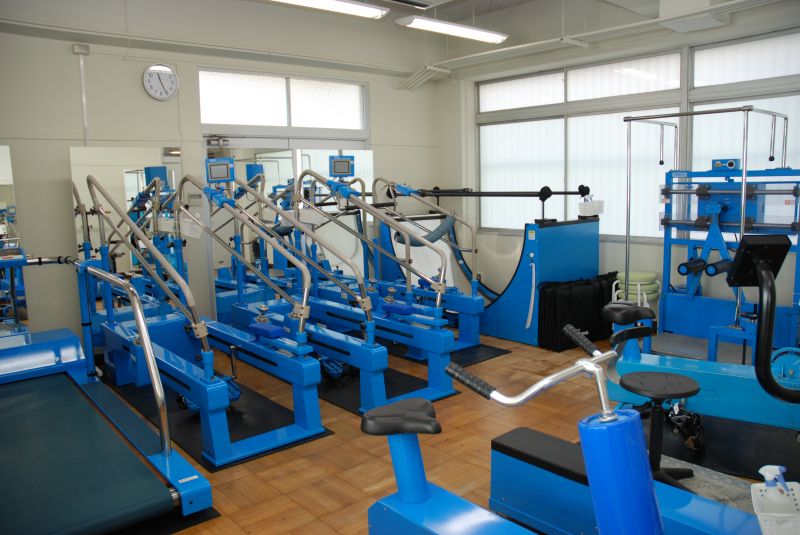
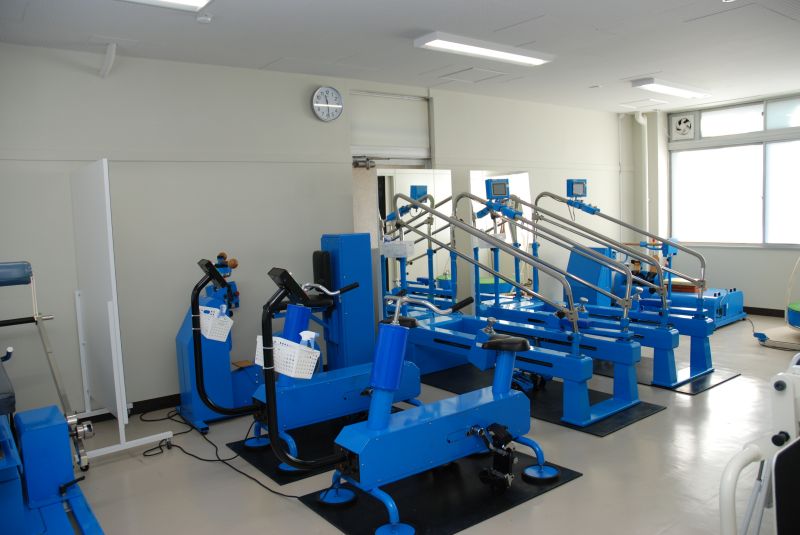
The QOM training is a training from the University of Tokyo developed with the purpose of improving the quality of movement. In QOM training, cognitive movement training machines are used to enhance the effect. With the cognitive movement type training machine, you can learn the movements that effectively use the deep muscles (internal muscle), improve the flexibility of each part of the body, including the trunk, and improve performance in various fields due to the improvement of physical operating capacity. Expected Contains many elements necessary for health promotion, and one of the characteristics is that people with different levels of physical condition can have fun training comfortably. It is hoped that it will be useful for health promotion and elder care prevention.
The University of Tokyo Advanced Sports Science Center opened a gym on the Komaba campus with the goal of using this QOM training not only on campus, but also for the general public to improve their health and sports skills.
QOM Gym 1
QOM Gym 2
The much anticipated FISU Healthy Campus project opens to all world universities
- A bespoke platform that enables universities to improve health and wellbeing on campus
- An unprecedented global network of best practices, successful projects and knowledge
- A holistic view of fitness, including mental health, nutrition, social responsibility and sustainability
- 100 projects that universities can develop to obtain the Healthy Campus Label certification

LAUSANNE, Switzerland – It’s finally here! After months of exhaustive preparations and expert inputs from around the world, the highly awaited FISU Healthy Campus project opens to all universities on 12 May – aiming to positively impact the lifestyles and wellbeing of millions of university students around the world, by encouraging physical activity and healthy choices on campuses.
 “Through this project, FISU will provide a unique and very important tool to universities around the world to promote the values of physical activity, health and nutrition among their student community,” says FISU President Oleg Matytsin.
“This project is really like a bridge between elite sport and the larger student community. Every year, there may be 10,000 or 20,000 athletes who participate in our events but there are more than 150 million university students across the globe.”
FISU Secretary General-CEO Eric Saintrond also noted that the role and reach of university sports extends well beyond competitions and elite athletes.
“Through this project, we have found a way to extend our activities to all students; not just elite student-athletes,” says Saintrond. “We believe that FISU has a very important social responsibility and we want to reach millions of students.”
 “There are more than 40,000 universities in the world. Even if we reach only 1% of them at the beginning, we will still be reaching 400-500 universities, across five continents,” continues Saintrond.
“To start, we can engage with millions of students around the world with just one percent of universities. We do not see this as a short or even medium-term project. This is a long-term investment in the future of our societies.”
Seven major world universities have already been part of the development process, acting as pilot universities for the project. They are: University of Western Australia, Universidad Nacional de La Matanza in Argentina, University of Turin in Italy, Peoples’ Friendship University of Russia (RUDN), Peking University in China, University of Lausanne (UNIL) in Switzerland and University of Johannesburg in South Africa.
“The real strength of this programme, is the holistic view of wellbeing in every aspect across the entire campus community,” says Prof. Tshilidzi Marwala, Vice-Chancellor and Principal of the University of Johannesburg. “This will help us as a university to stress the importance of healthy lifestyles to our community and to share and learn best practices”.
The programme is officially open to all universities in the world through the launch, on 12 May, of the official www.fisuhealthycampus.sport platform, developed by Lausanne-based Katapult SA. Universities can register on this platform and get access to a global network of best practices, successful projects and knowledge. Also on the platform, universities will find the ‘Standard Document’ with detailed information and scientific criteria to earn a ‘Healthy Campus Label’.
 “With the technical and scientific support from more than 30 recognised international experts in the field of health, we have developed a reference and standards document that will enable universities to be certified,” says Fernando Parente, Director of the FISU Healthy Campus programme. “This document contains 100 criteria to develop programmes aimed at obtaining the FISU Healthy Campus Label.”
While the objective of registration in the first year will be to earn the certification through implementation of health and fitness programmes, from the second year onwards, the FISU Healthy Campus Label will be awarded at five levels: Certified, Bronze, Silver, Gold and Platinum.
In order to cater to the broad demands of universities and campus communities, the Healthy Campus programme functions across six domains; Sport and Physical Activity, Mental and Social Health, Nutrition, Disease Prevention, Risk Behaviour, and Environment, Sustainability and Social Responsibility. The universities will be evaluated on an additional seventh criteria; their management of the Healthy Campus project.
“With this Healthy Campus project FISU is going several steps ahead from being an organiser of sports and education events to actually taking social responsibility for universities and students,” concludes FISU President Oleg Matytsin.
For more information on the FISU Healthy Campus project, please write to healthy.campus@fisu.net.

DUAL CAREER
The European University Sports Association, apart from the sports competitions and other educational events, also runs independent projects, together with other partners. Empowering young people and encouraging employability related to the sport sector is an important part of work done by projects related to Dual Career. Sport Employs YOUrope

Promoting and advocating Youth Employability in and through Sport.Smart Sport #smartsport

Project supports the implementation of the dual career guidelines, embracing sport and education.Education Model for Parents of AThletes

Establishing an on-line multi-lingual educational programme for parents of athletes involved in a “dual career” path.
International Day of University Sport
The International Day of University Sport (IDUS) is celebrated annually on September 20. Proposed by the International University Sports Federation (FISU), it is officially endorsed by the United Nations Education, Science and Culture Organisation (UNESCO).
Among others, the day aims at confirming the importance of sport in universities and the role of universities in the community as responsible actors for consolidating and developing quality physical and sport education at the service of citizens. Each year on 20 September, thanks to its network of university associations, clubs and partners, FISU will mobilise the academic world. The events will propose leisure sport activities, competitions, discussion workshops and cultural happenings to citizens of all ages.
IDUS falls within the framework of a multidisciplinary educational project insisting on the need for physical and sport education programmes, sports facilities and scientific studies in universities, with the purpose of fostering social inclusion, minorities integration and anti-doping, combating non-communicable diseases and the ongoing development of scientific research in the field of physical education and sport, taking into consideration the acquisition and transfer of knowledge as well as, and above all, social and economic policy at the local, national and international levels.
FISU and UNESCO members are invited to celebrate this day based on tailor-made events according to their culture and specific needs with the focus that sport is not to be taken out of universities and left to the initiative of the private sector because sport must be fully integrated in higher education and research structures, taking its rightful place in multidisciplinary strategies. All the different partners including universities and municipalities will join efforts to also organise the FISU Festival in the heart of their cities.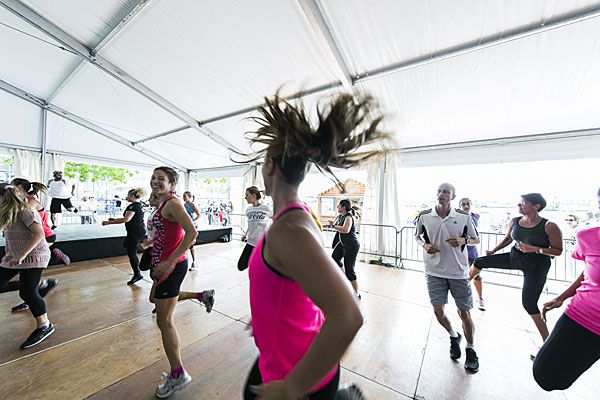
International University Sport Festival is organised in the heart of a city in order to attract a larger audience than only university students. It is an opportunity to invite citizens to do some physical exercise and bring university sport outside the university campus into the city. It is a specific event with dedicated rules and regulations, with one Festival per country organised.
Guidelines to Organise an IDUS Event
Guidelines to Organise a FISU Festival
We invite you to join us every year for IDUS, and share your university sport’s pictures and videos. Publish them on your Facebook, Instagram or Twitter account, using the hashtags #IDUS and #eusaunisport and send us an email at communications@eusa.eu. We will collect and publish them on our various EUSA media platforms. You are encouraged to use the IDUS logo in your pictures, too. You can print it or add the logo afterwards. Click here to download the logo in PDF or PNG format.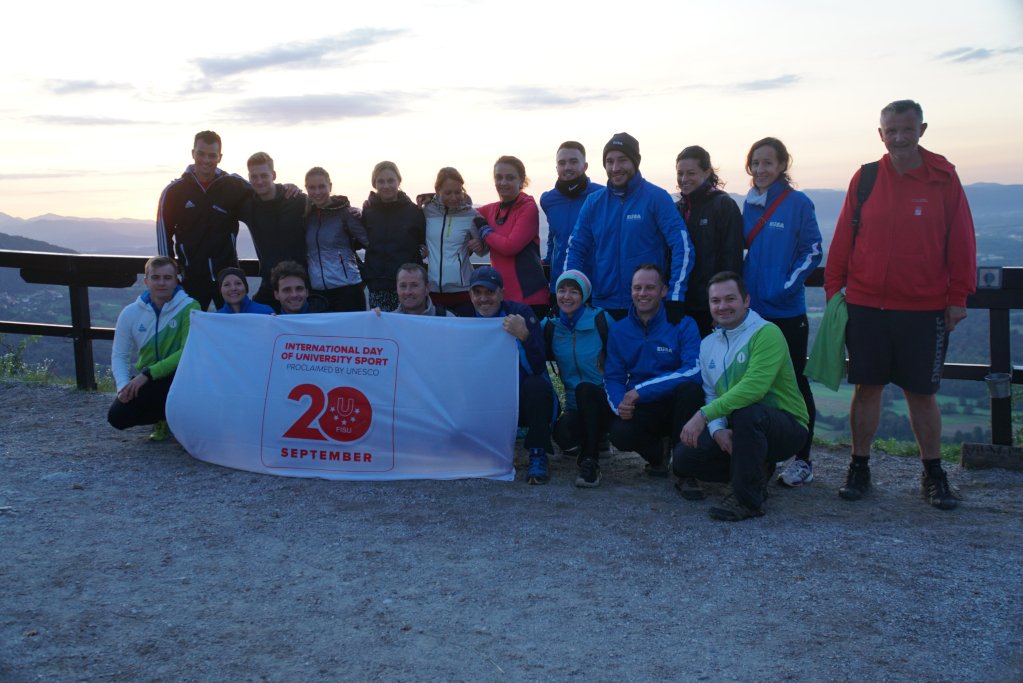
We would like to thank everyone for taking part – student athletes, EUSA member and partners, universities, ambassadors, representatives of sports bodies and the volunteers; thank you for helping us celebrate this day!
For more information, please see the documents above, and the official websites www.fisu.net and www.unesco.org.
EDUCATION THROUGH SPORT
The European University Sports Association, apart from the sports competitions and other educational events, also runs independent projects, together with other partners. In the area of Education Through Sport, EUSA in 2004 launched an Exhibition on University Sport in Europe. EUSA also actively takes part in promoting events such as European Week of Sport, International Day of University Sport and International Students’ day. European Week of Sport

The first ever European Week of Sport took place in September 2015 with the official opening taking place in Brussels. International Day of University Sport

The International Day of University Sport (IDUS) will be celebrated annually on September 20. University Sport Exhibition

European University Sports Association (EUSA) launched an Exhibition on University Sport in Europe in 2014.International Students’ Day

The International Students’ Day is celebrated all around the world on November 17th.
EUSA and Rugby Europe meet online

EUSA held an online video call with Rugby Europe on Wednesday, May 6, as the two sports bodies held fruitful discussions over a number of topics.
Present on behalf of EUSA in the meeting was Sports Manager Mr Besim Aliti and Assistant Sports Manager Mr Liam Smith, while International Relations and Finance Manager Mr Maxime Cotis, Head of Competitions Mr Philippe Tuccelli as well as Chief Executive Officer Mr Florent Marty were in attendance representing Rugby Europe.
In the meeting both organisations presented the current situation regarding the impact of Covid-19 on Rugby 7s and university sport in Europe.
The existing Memorandum of Understanding between the two organisations was then reviewed, with the hope of signing an updated document in the coming months. Upon the signing of a revised Memorandum of Understanding, Rugby 7s is set to be confirmed as an additional sport to be featured at the next European Universities Games, which will be held in July 2021 in Belgrade, Serbia. 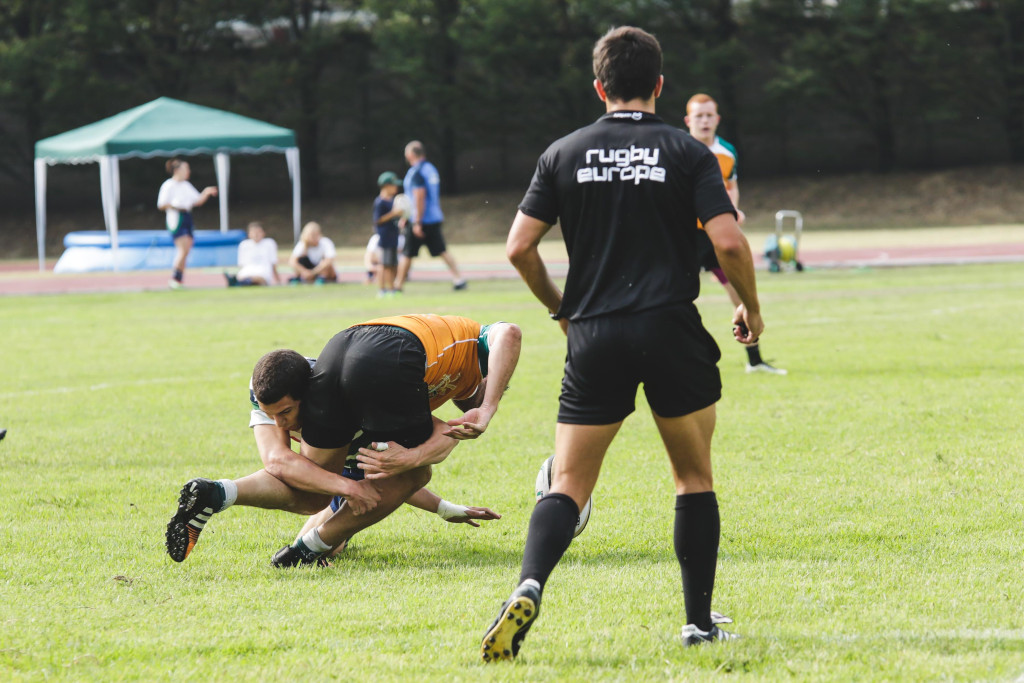
The operational and technical aspects of hosting future EUSA Rugby 7s events were then discussed, including collaboration on topics such as sport equipment and referees.
EUSA wishes Rugby Europe all the best during this challenging time for sport, and we look forward to engaging once more at EUSA Rugby 7s events in the near future.
For more information about Rugby Europe and their work, please visit rugbyeurope.eu.
FISU’s Healthy Campus project officially open
The highly-anticipated FISU Healthy Campus project, which aims to positively impact the lifestyles and wellbeing of millions of university students around the world by encouraging physical activity and healthy choices on campuses, was officially opened on May 12.
Open to all universities in the world through this week’s launch via the official www.fisuhealthycampus.sport platform, universities are now able to register on this platform and get access to a global network of best practices, successful projects and knowledge. The platform also gives users access to the ‘Standard Document’ with detailed information and scientific criteria to earn a ‘Healthy Campus Label’.
Seven universities from across the globe, namely University of Western Australia, Universidad Nacional de La Matanza in Argentina, University of Turin in Italy, Peoples’ Friendship University of Russia (RUDN), Peking University in China, University of Lausanne (UNIL) in Switzerland and University of Johannesburg in South Africa, have been part of the development process, acting as pilot universities for the project.
“Through this project, FISU will provide a unique and very important tool to universities around the world to promote the values of physical activity, health and nutrition among their student community,” said FISU President Mr Oleg Matytsin.
“This project is really like a bridge between elite sport and the larger student community. Every year, there may be 10,000 or 20,000 athletes who participate in our events but there are more than 150 million university students across the globe.”
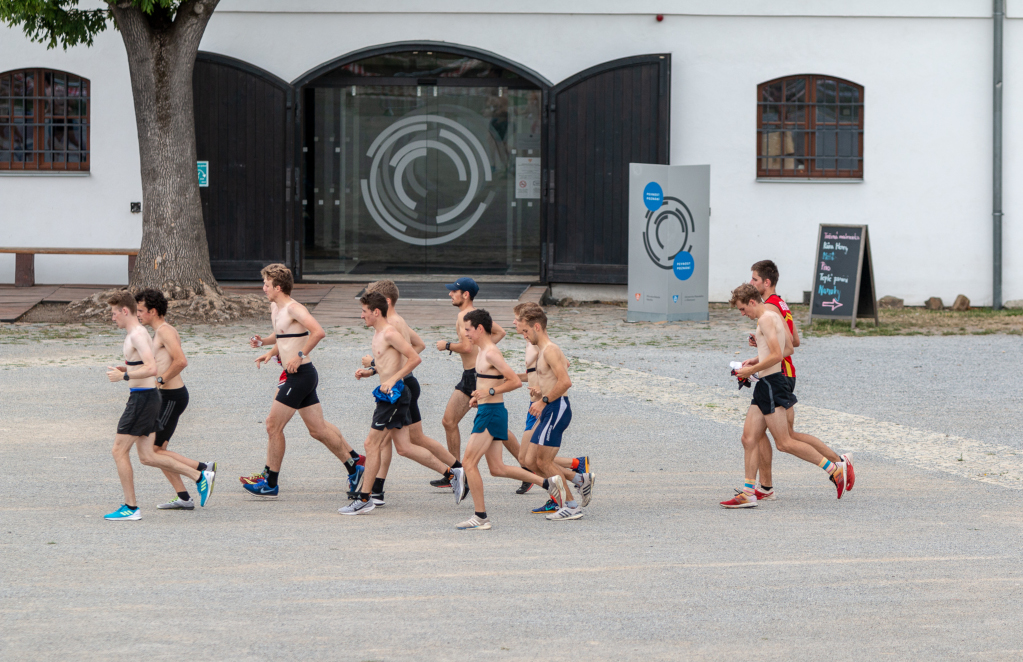
“With the technical and scientific support from more than 30 recognised international experts in the field of health, we have developed a reference and standards document that will enable universities to be certified,” says Mr Fernando Parente, Director of the FISU Healthy Campus programme. “This document contains 100 criteria to develop programmes aimed at obtaining the FISU Healthy Campus Label.”
The objective of registration in the first year will be to earn the certification through implementation of health and fitness programmes, yet from the second year onwards, a ranking system can be achieved by all participating universities, where the FISU Healthy Campus Label will be awarded at five levels: Certified, Bronze, Silver, Gold and Platinum.
The Healthy Campus programme operates across six domains, allowing inclusivity for a wide range of universities and campuses across the world. They are: Sport and Physical Activity, Mental and Social Health, Nutrition, Disease Prevention, Risk Behaviour, and Environment, Sustainability and Social Responsibility. The universities will be evaluated on an additional seventh criteria: their management of the Healthy Campus project.
“With this Healthy Campus project FISU is going several steps ahead from being an organiser of sports and education events to actually taking social responsibility for universities and students,” Mr Matytsin concluded.
For more information on the FISU Healthy Campus project, please write to healthy.campus@fisu.net.
 NoTodoSport